UrbanEveryday
Building a Home Gym: 5 Smart Steps and Equipment Worth Considering
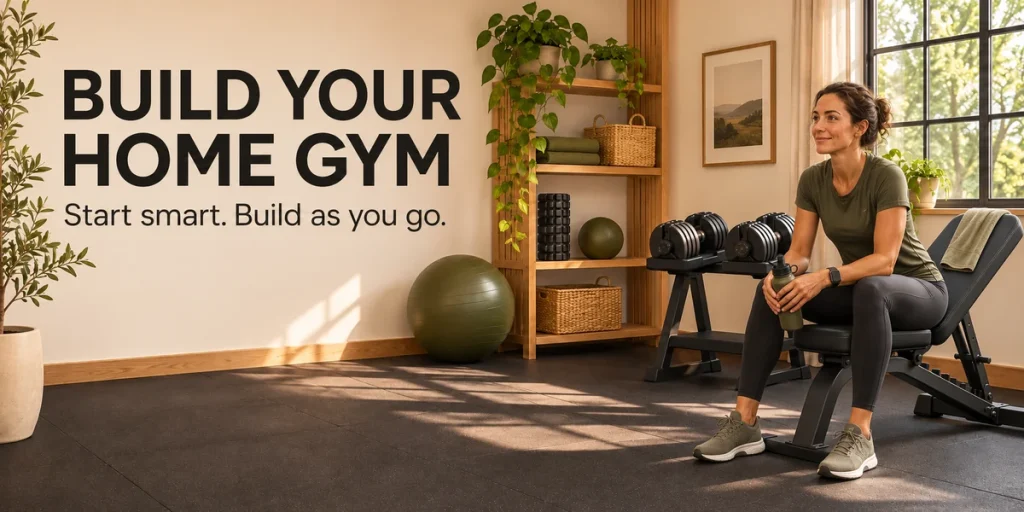
Building a home gym works best when you start with the way you actually want to train. A useful setup can begin with a clear patch of floor, a pair of adjustable dumbbells and a dependable bench. You can add a premium cardio machine later, once you know it will earn its place.
This guide walks through a practical buying order, three products to consider, and the space checks that help you avoid an expensive room full of equipment you rarely use.
1. Plan your space before building a home gym
Measure the usable floor area, ceiling height, doorways and delivery route. Then mark out the equipment footprint with painter’s tape. Include room to move around a bench, lift weights into position and get on and off a machine. The storage footprint and the space needed during exercise are often different.
Think about the room as three simple zones: a place to train, a place to store equipment and a clear route through the space. Keep doors, heaters and household walkways unobstructed. A small, comfortable room that is easy to reset is more useful than a crowded room with every possible accessory.
- Spare room: prioritize equipment that stores neatly and check whether the floor is suitable for the planned loads.
- Garage: consider temperature, ventilation, moisture and a level training surface.
- Apartment: check building rules and noise transmission. A mat does not make dropped weights silent or establish that a floor can support heavy equipment.
If structural capacity is uncertain, get advice from a qualified building professional before installing heavy racks or concentrated loads.
2. Buy the equipment you will use most
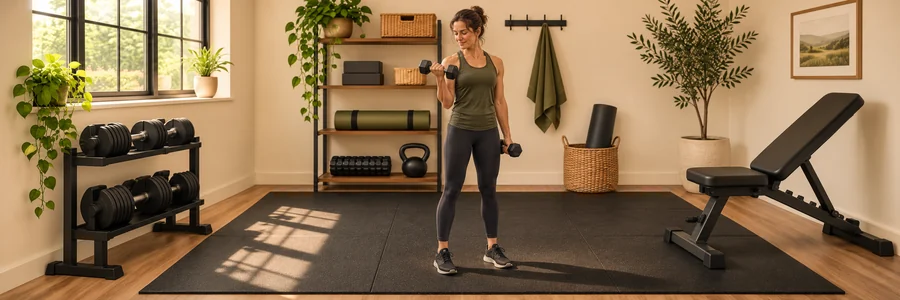
Choose your first purchases around the movements you already enjoy or intend to learn. For a strength-focused room, adjustable dumbbells and a bench are a versatile starting point. For a cardio-focused room, the machine you will use consistently may deserve the larger share of your budget.
You do not need to buy everything at once. Set a total spending limit that includes delivery, suitable flooring and storage. Keep some of that budget unspent until you have used the room enough to notice what is actually missing.
Product to consider: PowerBlock Elite EXP adjustable dumbbells
The linked Stage 1 listing is a pair with a stated range of 5–50 pounds per dumbbell. Adjustable weights can reduce the storage needed compared with a rack of separate pairs. They are worth considering if you want several resistance options in a compact strength area.
Check before buying: confirm that the listing is for two dumbbells, verify the included weight range and check compatibility before ordering any expansion kit. The “90” wording in the product family name does not mean the Stage 1 package includes 90 pounds per hand. Read the adjustment and handling instructions, and do not assume adjustable dumbbells are designed to be dropped.
View PowerBlock Elite EXP Stage 1 on Amazon (affiliate link) →
Product to consider: FLYBIRD WB5 adjustable bench
The FLYBIRD WB5 listing describes a foldable bench with adjustable backrest positions. It is an option to compare when your home gym also needs to function as a spare room. A bench adds supported exercise options, but it still needs a stable, level surface and enough space around it.
Check before buying: compare the pad dimensions, seat height, folded size and adjustment system with your needs. Follow the exact model’s stated load limits, including how the manufacturer counts body weight and lifted weight. A large advertised capacity is not a reason to skip assembly, locking-pin or stability checks.
View the FLYBIRD WB5 bench on Amazon (affiliate link) →
3. Choose flooring for the activity
Flooring should suit both the equipment and the surface underneath it. A portable exercise mat can make floor-based movement more comfortable. Equipment mats and gym flooring serve different purposes, so check the manufacturer’s guidance rather than treating every soft mat as a lifting platform.
For a strength area, look for a stable surface that does not shift or compress excessively under the bench. Confirm compatibility with your existing floor finish, especially where rubber or other materials may leave marks. Keep edges flat and cables out of the training area.
Storage matters here too. Put weights on a suitable rack or stand, not where they can roll into a walkway. Store heavy items low and keep children and pets away from equipment while it is being used or adjusted.
4. Add premium cardio when it fits your routine
A cardio machine is often the biggest single purchase in a home gym. Before buying, consider whether you enjoy that type of exercise, whether its noise suits your home and whether you can leave it ready to use. Folding or separating a machine is helpful, but repeated setup can become a barrier.
Product to consider: Concept2 RowErg
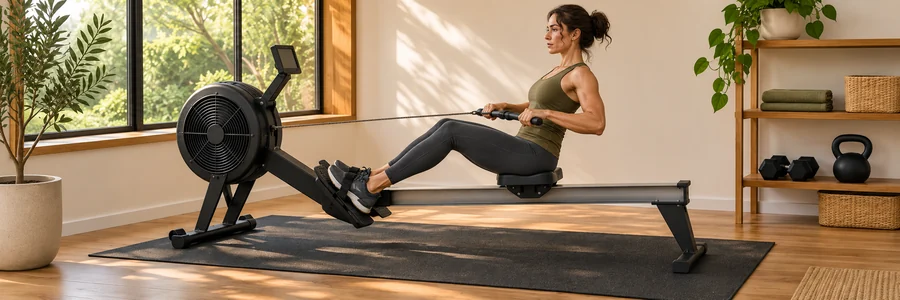
The Concept2 RowErg is a premium option for someone who enjoys rowing and wants a dedicated cardio station. It uses air resistance and includes the PM5 monitor. Concept2 says it separates into two pieces for storage, and its ErgData app is free; some third-party apps may charge separately.
Measure carefully: Concept2 lists an assembled footprint of 8 × 2 feet and recommends 9 × 4 feet with clearance for use. That makes it a substantial piece of equipment even though it can be stored in sections. Air resistance also produces fan noise, so consider the people sharing your home.
Check before buying: confirm the leg-height version, seller, delivery arrangements and warranty coverage. Compare the total delivered price with the manufacturer’s own offer. A higher marketplace price does not automatically buy additional features.
View the Concept2 RowErg on Amazon (affiliate link) →
See Concept2’s published dimensions and product information for the current specifications.
5. Build your home gym in stages
- Start with the room: measure, clear the floor and decide how equipment will be stored.
- Add your core equipment: buy the weights or cardio option that supports your main activity.
- Use it consistently: notice what makes setup awkward and what you keep wishing you had.
- Upgrade deliberately: add a bench, heavier weights or a cardio machine when it solves a specific need.
For a smaller strength setup, the dumbbells and bench above are a sensible shortlist to compare. For a larger room and a rowing-focused routine, the RowErg can become the main investment. You do not need all three products to get started.
Questions to ask before checkout
How much space does a home gym need?
There is no single minimum that suits every setup. Measure the equipment you want, then add the manufacturer’s operating clearance and a safe route around it. A floor-exercise corner and a room containing a long rowing machine have very different requirements.
Is expensive equipment worth it?
It can be, when the extra cost buys something you will use: a suitable adjustment range, serviceable parts, better storage or a machine you enjoy. Evaluate the exact model, warranty and total delivered cost. Brand reputation alone does not establish that an item fits your body, room or routine.
What should I buy first?
Buy for your main activity first. If that is strength training, start with appropriately sized resistance and a clear training area. If it is rowing, make sure the space and budget work before adding accessories. Follow the equipment instructions and get qualified coaching when learning unfamiliar exercises.
Make room for a routine you enjoy
Building a home gym is less about filling a room and more about making movement easier to start. Choose a few useful pieces, keep the space welcoming and expand only when your routine gives you a reason.
Explore our Beyond Fitness collection on Amazon, or read how UrbanEveryday approaches product recommendations.
Editorial note: This is a research-based buying guide, not a hands-on product test. Illustrations are AI-generated concepts and do not depict the specific products linked above. Product specifications, sellers and availability can change; check the current listing before ordering. See our affiliate disclosure.